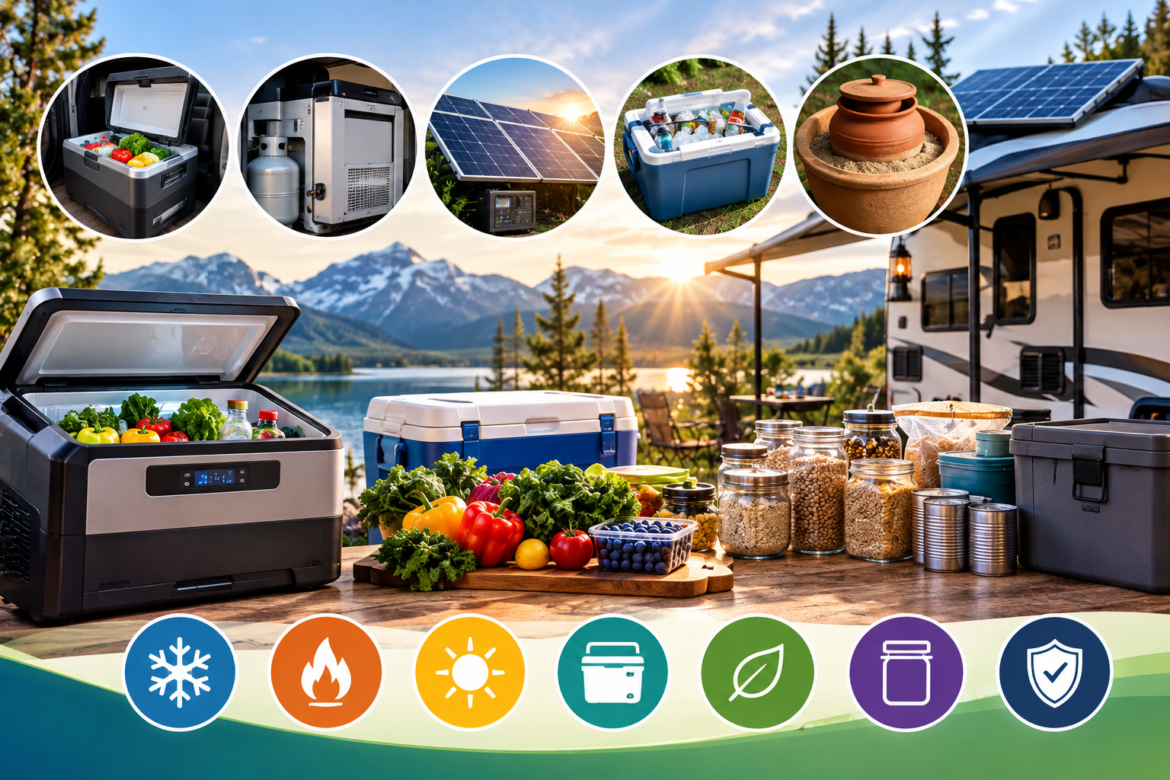
Living off-grid in an RV does not mean giving up fresh food, cold drinks, or safe meals. With the right mix of refrigeration, smart storage, and food choices, you can eat well even when you are far from hookups. The key is matching your cooling method to your power supply, travel style, and how long you plan to stay off-grid.
This guide covers practical alternatives to a standard RV refrigerator, including 12V compressor fridges, propane absorption refrigerators, solar-powered setups, coolers, evaporative cooling, and no-refrigeration food storage. You will also learn how to keep food safe, reduce waste, and make your off-grid kitchen easier to manage.
Why Off-Grid Food Storage Is Different
At home, most people open the refrigerator without thinking about electricity. In an RV, every cold drink, frozen meal, and leftover container uses energy or fuel. When you are boondocking, dry camping, or traveling through remote areas, you need a system that keeps food cold without draining your batteries or wasting propane.
Off-grid food storage is also about safety. Perishable foods such as meat, dairy, eggs, and cooked leftovers should stay out of the temperature danger zone. Keeping cold food at or below 40°F (4°C) helps slow bacterial growth, while a food thermometer is useful for checking both storage and cooking temperatures.
A good off-grid setup usually combines:
- A reliable cooling method, such as a compressor fridge, propane fridge, or high-quality cooler
- Enough power or fuel to keep that method running
- Proper food organization so you use items before they spoil
- Dry-goods storage for foods that do not need refrigeration
- A simple routine for meal planning and leftovers
The best option depends on your RV size, budget, climate, and how often you camp without hookups.
12V Compressor Refrigerators
A 12V compressor refrigerator is one of the most popular off-grid refrigeration choices for modern RVers. It runs directly from your RV’s 12V DC battery system and works much like a household refrigerator, using a compressor to circulate refrigerant.
These fridges are efficient, cool quickly, and maintain steady temperatures even when your RV is not perfectly level. That makes them especially useful for travelers who move often or park on uneven campsites.
Why RVers Like Them
A 12V compressor fridge is a strong choice if you already have solar panels, a battery bank, or a portable power station. It can be powered while driving, charging, or parked off-grid, and many models can also be supported by solar or shore power.
Benefits include:
- Fast cooling compared with absorption refrigerators
- Reliable performance in hot weather
- No propane required
- Better temperature control
- Works well even when the RV is not level
- Available in built-in and portable models
Things to Consider
The main challenge is power use. A compressor fridge needs a dependable battery supply, especially in warm climates where it runs more often. Before choosing one, check the fridge’s average daily power draw and compare it with your battery capacity and solar input.
For off-grid use, it helps to have:
- A lithium battery bank or another battery type with enough usable capacity
- Solar panels to recharge batteries during the day
- A battery monitor so you can see how much power you are using
- Good ventilation around the fridge
- A plan for cloudy days or shaded campsites
If you enjoy boondocking for several days at a time, a 12V compressor fridge paired with solar power is often one of the most convenient and flexible setups.
Propane Absorption Refrigerators
Propane absorption refrigerators have been used in RVs for decades. Instead of using a compressor, they use heat—usually from propane—to drive the cooling process. Many are two-way models that run on propane or 120V AC power, while three-way models can also use 12V DC power.
These refrigerators are popular with off-grid RVers because they do not depend heavily on battery power. If you have propane, you can keep food cold even when your batteries are low.
Advantages of Propane Fridges
A propane absorption refrigerator can be a smart option if you camp in remote places and want refrigeration without relying on solar panels or a large battery bank. Propane fridges are also known for running quietly and offering more food storage space in some RV layouts.
Key benefits include:
- Low electricity use
- Can run for long periods on propane
- Works well for extended off-grid stays
- Often built into older RVs and many current models
- Useful when solar power is limited
Limitations to Know
Propane absorption refrigerators cool more slowly than compressor models and can struggle in very hot weather. They also generally need to be fairly level to operate properly, which can matter if you park on uneven ground.
Before relying on one off-grid, make sure you:
- Check propane levels before every trip
- Keep the refrigerator vents clean and unobstructed
- Park as level as possible when practical
- Follow the manufacturer’s safety instructions
- Avoid running propane appliances while traveling if your RV manufacturer or local safety guidance advises against it
Propane refrigeration can be excellent, but it works best when you understand its limits and maintain the system properly.
Solar-Powered Refrigeration
Solar power has become one of the most practical ways to run an off-grid RV refrigerator. With solar panels, a battery bank, and a compatible 12V compressor fridge, you can keep food cold using energy from the sun rather than relying entirely on fuel or campgrounds.
This setup is especially appealing for long-term travelers, van lifers, and RVers who prefer quiet campsites away from generators.
How a Solar Fridge Setup Works
A basic solar refrigeration system includes:
- Solar panels mounted on the roof or set up portable panels
- A charge controller to manage power going into the batteries
- A battery bank to store electricity
- A 12V compressor refrigerator or portable fridge/freezer
- Wiring, fuses, and monitoring equipment
During the day, solar panels recharge the batteries. The fridge runs from battery power, including at night or during cloudy weather. A portable power station with solar input can also support a compressor fridge for off-grid use.
Sizing Your System
The right system depends on the refrigerator’s daily energy use, the climate, and how much sun you receive. Hot weather, frequent door opening, warm food going into the fridge, and poor ventilation all increase power demand.
A few practical tips:
- Choose an energy-efficient 12V fridge rather than oversizing your solar system later
- Install more solar capacity than your average daily use, especially if you travel in cloudy regions
- Use lithium batteries if your budget allows, because they offer more usable capacity and handle deep cycling well
- Keep the fridge full but not overcrowded, since cold items help maintain temperature
- Pre-chill food and drinks before placing them inside
Solar refrigeration takes some planning, but once set up correctly, it can make off-grid RV living much more comfortable.
High-Quality Coolers and Ice Boxes
You do not always need an electric refrigerator to keep food cold. A well-insulated cooler or ice box can be an excellent backup or primary cooling method for short trips, weekend camping, or RVers with limited power.
Rotomolded coolers are popular because they are strongly insulated and can keep ice for several days when used properly. Some high-end coolers can keep food cold for around five to seven days without electricity under good conditions.
How to Make a Cooler Last Longer
A cooler works best when you treat it like a temporary refrigerator rather than a place to toss in warm groceries.
Try these tips:
- Pre-chill the cooler with ice for 24 hours before your trip.
- Use block ice instead of relying only on small ice cubes, since block ice melts more slowly.
- Freeze water bottles or meal-size portions ahead of time.
- Keep the cooler in the shade and out of direct sunlight.
- Open it only when necessary.
- Separate drinks from food so the food cooler stays closed longer.
- Drain melted water only if it is affecting food storage; otherwise, cold water can help maintain temperature.
- Use a separate cooler for drinks if you have space.
Best Foods for Cooler Storage
Coolers are ideal for:
- Pre-cooked meals
- Cheese
- Yogurt
- Eggs
- Fresh vegetables
- Condiments
- Deli meat for short trips
- Frozen meat if you plan to cook it within a safe time frame
For meat, dairy, eggs, and prepared foods, keep them in a cooler packed with ice or ice packs designed to maintain safe temperatures.
A cooler is not always the best choice for long-term off-grid living, but it is affordable, flexible, and useful as a backup when your main fridge is full or unavailable.
Evaporative Cooling and Passive Methods
Evaporative cooling is a low-tech option that can help keep certain foods slightly cooler in dry climates. It works by allowing water to evaporate, which removes heat from the surrounding area.
A simple version is the “pot-in-pot” method, where a smaller container sits inside a larger container with wet sand or cloth between them. As water evaporates, the inner container becomes cooler. This method is not powerful enough to replace refrigeration for meat or dairy, but it can help extend the freshness of produce in the right conditions.
When Evaporative Cooling Helps
This method works best when:
- The weather is hot but dry
- You have access to water
- You are storing sturdy produce such as root vegetables, onions, or some fruits
- You need a supplemental cooling method rather than a main refrigerator
It is less effective in humid climates because evaporation slows down when the air already contains a lot of moisture. It also cannot make food cold enough for safe long-term storage of perishable items.
Think of evaporative cooling as a helpful extra tool, not a replacement for a fridge or cooler.
Food Storage Without Refrigeration
Some of the best off-grid food storage does not involve cooling at all. By choosing shelf-stable foods and organizing your pantry well, you can reduce how much refrigeration you need.
A smart off-grid pantry includes foods that are lightweight, compact, nutritious, and easy to prepare.
Great No-Fridge Foods
Stock up on:
- Rice, pasta, oats, and couscous
- Canned beans, vegetables, fish, chicken, and soups
- Dried beans and lentils
- Peanut butter and other nut butters
- Tortillas, crackers, and flatbreads
- Powdered milk
- Instant coffee, tea, and drink mixes
- Honey, jam, and syrup
- Dried fruit and nuts
- Jerky and shelf-stable meat snacks
- Dehydrated meals
- Spices, oil, vinegar, and sauces
- UHT or shelf-stable milk alternatives
These foods give you flexibility when refrigeration is limited. They are also useful during travel days, bad weather, or unexpected delays.
Store Dry Goods Properly
Heat, moisture, pests, and sunlight can ruin pantry food quickly. Use airtight containers for grains, pasta, flour, and snacks. Label items with purchase or opening dates, and store food in a cool, dark cabinet away from the stove or refrigerator exhaust.
For long trips, keep heavier items low and secure so they do not shift while driving. Clear bins make it easier to see what you have and prevent forgotten food from hiding at the back of a cabinet.
Keep Food Safe While Off-Grid
Food safety matters even more when you are away from easy grocery stores and medical help. A little planning prevents spoiled food, wasted money, and an unpleasant trip.
Follow Simple Temperature Rules
Keep cold foods at 40°F (4°C) or below whenever possible. Use a small appliance thermometer inside your fridge or cooler so you know the real temperature rather than guessing.
Avoid leaving perishable food out for long periods, especially in warm weather. If food has been sitting in the danger zone for too long, it is safer to throw it out than risk illness.
Plan Meals Around Perishables
One of the easiest ways to reduce food waste is to eat perishable foods first.
A simple order looks like this:
- Eat fresh leafy greens, berries, and soft fruits early.
- Use dairy, eggs, and opened packages next.
- Cook or freeze meat soon after purchase.
- Save shelf-stable foods for later in the trip.
- Use leftovers within a safe time frame and keep them properly chilled.
Meal planning also helps you avoid opening the fridge repeatedly. If you know what you are cooking each day, you can take out only what you need.
Use Separate Storage When Possible
If you use a cooler, keep raw meat separate from ready-to-eat foods. Store raw meat in sealed containers or leak-proof bags and place it below other foods so drips cannot contaminate anything else.
Wash hands before preparing food, keep cutting boards clean, and cook meat to the proper internal temperature. A food thermometer is one of the most useful tools in an off-grid RV kitchen.
Choosing the Best Method for Your RV
There is no single “best” refrigeration method for every RVer. The right choice depends on your travel habits and available resources.
| Method | Best For | Main Benefit | Main Limitation |
|---|---|---|---|
| 12V compressor fridge | Solar-equipped RVs and frequent boondockers | Fast, reliable cooling | Requires battery and charging power |
| Propane absorption fridge | Remote camping and low-electricity setups | Runs mainly on propane | Slower cooling and level-sensitive |
| Solar-powered fridge | Long-term off-grid travel | Quiet, renewable power | Higher upfront cost |
| High-quality cooler | Short trips or backup cooling | No power needed | Ice melts and space is limited |
| Evaporative cooling | Dry climates and produce storage | Uses very little energy | Not safe for meat or dairy |
| Dry-goods pantry | Every off-grid RVer | Reduces refrigeration needs | Requires meal planning |
Many RVers use a combination. For example, you might run a 12V compressor fridge on solar power, keep a cooler for drinks and extra food, and maintain a well-stocked dry-goods pantry for backup meals.
Smart Habits for Off-Grid Kitchens
Once you have a cooling system, small habits make a big difference.
- Pre-chill your fridge or cooler before loading food.
- Put cold items in cold, not room-temperature groceries.
- Keep the fridge or cooler out of direct sun.
- Open doors less often and know what you need before opening them.
- Use clear containers so food is easy to find.
- Freeze meals in flat portions to save space.
- Keep a backup food supply in case of power or fuel problems.
- Check seals, vents, and door gaskets regularly.
- Clean spills quickly to prevent odors and bacteria.
- Track your power use if you rely on batteries and solar.
These habits help your equipment work better and make off-grid cooking less stressful.
A Practical Off-grid RV Living
Alternative refrigeration and food storage methods make off-grid RV living more practical, comfortable, and enjoyable. A 12V compressor fridge offers convenience and reliable cooling, while a propane absorption refrigerator can be valuable when battery power is limited. Solar power can support both systems, and a high-quality cooler remains one of the simplest backup options available.
The most reliable off-grid kitchen combines the right equipment with smart food choices. Keep perishables cold, build a strong pantry of shelf-stable foods, plan meals around what spoils first, and use safe storage practices. With a little preparation, you can enjoy fresh meals, cold drinks, and fewer worries—no matter how far off the grid you roam.


